
Mercedes 280SL vs British Sports Cars of the 1960s
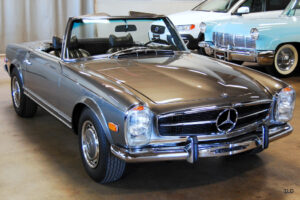 When enthusiasts talk about the golden era of sports cars, the conversation often turns to the 1960s. It was a decade that produced some of the most iconic machines ever built, including the Jaguar E-Type, Austin-Healey 3000, Triumph TR4, and the Mercedes-Benz 280SL. Comparing the Mercedes 280SL vs British sports cars from the 60’s provides insight into two different philosophies of engineering and design. The Germans focused on refinement, durability, and innovation, while the British leaned heavily on raw driving feel, racing pedigree, and affordability.
The Mercedes-Benz 280SL: The “Pagoda”
The Mercedes 280SL, introduced in 1967, carried the nickname “Pagoda” due to its distinctive concave hardtop. It wasn’t simply a stylish touch—the shape was structurally stronger and improved rollover safety. Built as part of the W113 series, the 280SL was the culmination of Mercedes-Benz’s engineering focus on safety, comfort, and performance in equal measure.
Key characteristics of the 280SL included:
2.8-liter inline-six engine producing about 170 horsepower.
Fuel injection for precise delivery and reliability.
A four-speed manual transmission, with an optional automatic that appealed to luxury buyers.
Advanced safety features like crumple zones and a rigid passenger cell.
A combination of elegance and usability, making it equally at home in city traffic or on the autobahn.
When evaluating the Mercedes 280SL vs British sports cars, it’s important to note that Mercedes positioned the SL as a more upscale, everyday-capable vehicle. It was never meant to be the rawest sports car on the road; instead, it combined performance with unmatched build quality and comfort. This remains the same when considering the Mercedes 280sl compared to classic sports cars of the 1960’s overall.
British Sports Cars of the 1960s
Across the English Channel, British manufacturers were producing machines that embodied a very different spirit. Sports cars from Jaguar, Triumph, MG, and Austin-Healey became symbols of spirited driving and racing success.
Some of the most notable models included:
Jaguar E-Type – Launched in 1961, often described as one of the most beautiful cars ever built, with a top speed near 150 mph.
Austin-Healey 3000 – Known for its rally pedigree and torquey six-cylinder engine.
Triumph TR4/TR5 – Affordable, sporty roadsters with a strong enthusiast following.
MG B – Accessible, fun to drive, and one of the best-selling British sports cars of its time.
These cars were generally lighter, more affordable, and more performance-focused than the Mercedes. They emphasized driver engagement and racing credibility, but often lacked the long-term durability and refinement of the German rival.
Engineering Approaches: Precision vs Passion
The biggest contrast in the Mercedes 280SL vs British sports cars debate lies in engineering philosophy.
Mercedes 280SL: Precision engineering, advanced safety, fuel injection, and long-lasting reliability. Mercedes was building a car for both spirited driving and daily usability.
British Sports Cars: Focused on raw emotion, light weight, and affordability. Engineering was more straightforward, which made them easier to repair but also more prone to quirks and breakdowns.
Where Mercedes emphasized longevity and sophistication, the British emphasized driving excitement and affordability.
Driving Experience
For enthusiasts, the driving feel is often the deciding factor when comparing the Mercedes 280SL vs British sports cars.
Mercedes 280SL: Smooth ride, comfortable cabin, precise steering, and a feeling of security. It was quick, but never brutal—more grand tourer than track car.
Jaguar E-Type: Raw power and aggressive acceleration, with handling that inspired confidence at speed.
Austin-Healey 3000: A bit heavier but charismatic, with a growling exhaust note and rally heritage.
Triumph TR4/TR5 and MG B: Lighter and more nimble, though not as refined or fast as the Mercedes or Jaguar.
In short, the Mercedes gave you a polished and luxurious experience, while the British cars aimed to make you feel like a racing driver every time you got behind the wheel.
Reliability and Maintenance
Another important factor in the Mercedes 280SL vs British sports cars comparison is how these vehicles aged.
Mercedes 280SL: Built to last, with exceptional materials and attention to detail. Many are still on the road today with original components. Regular maintenance is key, but major failures are far less common.
British Sports Cars: Fun but temperamental. Electrical problems (especially Lucas wiring) were notorious, and many suffered from rust. While parts were cheaper and more accessible, owners often found themselves working on their cars as much as they drove them.
Collectors today often appreciate the Mercedes for its reliability, while British cars are beloved by enthusiasts who don’t mind a bit of tinkering.
Market Value Then and Now
Back in the 1960s, the price point of the Mercedes 280SL vs British sports cars was very different.
Mercedes 280SL: Sold for around $7,000 new, making it a premium car.
Jaguar E-Type: Priced around $5,500, a bit less but still a luxury sports car.
Austin-Healey 3000, Triumph TR4, MG B: These ranged between $2,000–$3,500, accessible to a much wider audience.
Today, the values reflect their heritage and collectability:
Mercedes 280SL: Often $80,000–$150,000 depending on condition.
Jaguar E-Type: $100,000+ for good examples, especially Series I.
Austin-Healey 3000: $40,000–$70,000.
Triumph TR4/TR5 and MG B: More affordable, often $15,000–$30,000, though rare or concours examples can fetch more.
Collectors seeking a balance of elegance, usability, and investment often lean toward the Mercedes. Those who want classic British flair and performance on a budget might prefer the others.
Legacy and Influence
Looking back at the Mercedes 280SL vs British sports cars, it becomes clear that both camps left an indelible mark on automotive history.
The 280SL paved the way for future Mercedes SL models, cementing the brand’s reputation for combining performance with everyday usability. Its safety-first philosophy influenced the entire industry. But safety was not top of mind, of course the sleek design of the 280sl is what really hooked people.
The British cars defined what it meant to own a sports car in the 1960s—light, fun, and emotionally engaging. They inspired generations of roadsters, including the Mazda MX-5 Miata decades later.
Conclusion
The debate over Mercedes 280SL vs British sports cars of the 1960s ultimately comes down to priorities. If you wanted luxury, reliability, and understated class, the Mercedes-Benz 280SL was unmatched. If you craved raw excitement, style, and a racing feel, the British machines—Jaguar E-Type, Austin-Healey, Triumph, or MG—delivered thrills at a lower price.
Today, both are cherished by collectors for what they represent: two distinct approaches to building sports cars during one of the most exciting decades in automotive history.